OFFROAD.GUIDEBuilt your way. No haggling.
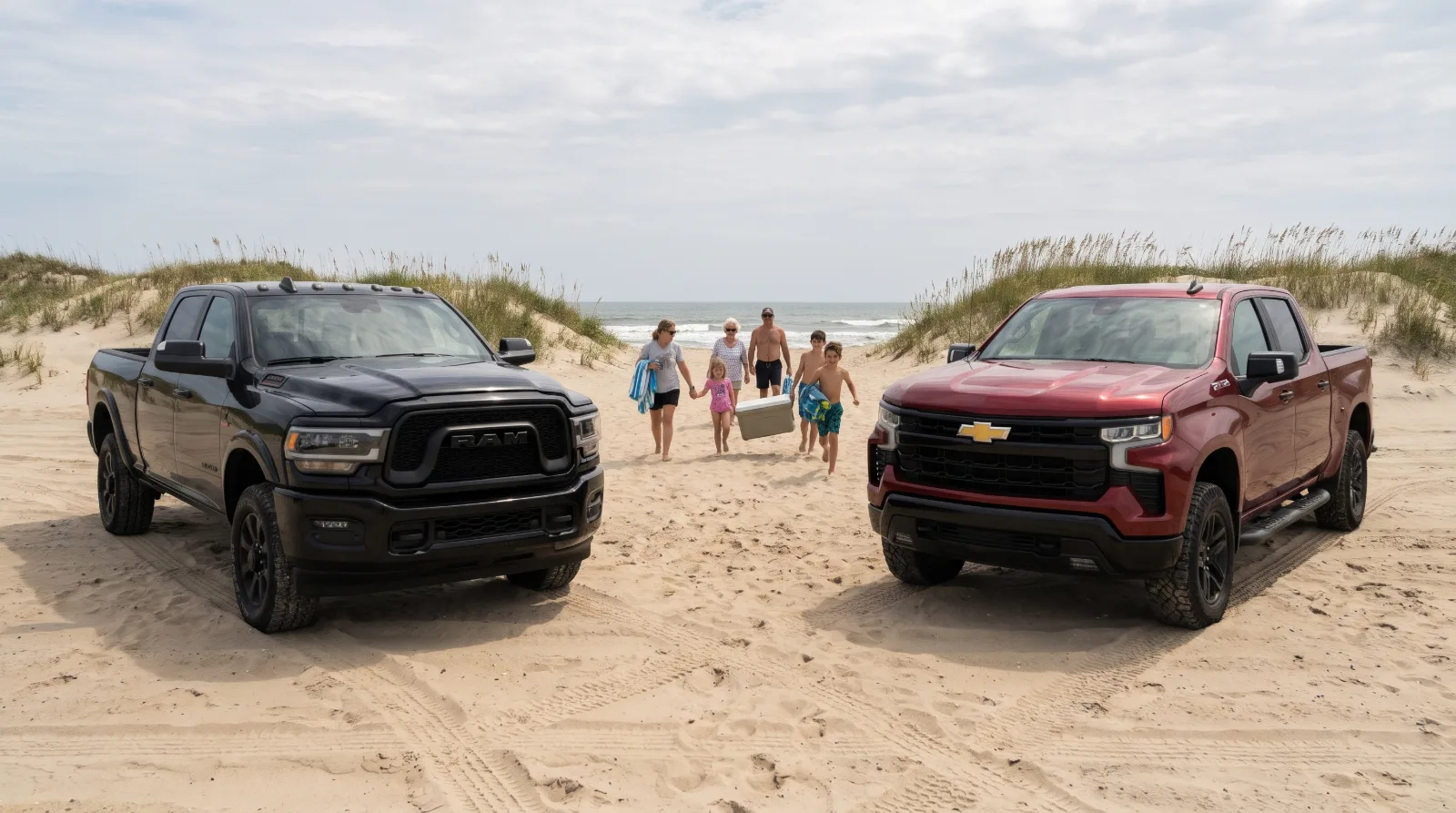
A family on the Carova beach beside two off-road pickups

Buyer’s guide · Leasing

Lease or buy an off-road 4x4? What resale, lifts and beach miles do to the math

Lease payments come down to how much value a vehicle loses, and off-road trucks and SUVs lose less than most. But a lease also expects the vehicle back stock, inside its miles and without trail scars. Here is how to tell which way to go.

Short answer

Lease an off-road 4x4 if you will keep it stock, stay inside about 12,000 miles a year and want a new one every few years; trucks and SUVs that hold their value tend to lease well. Buy if you plan a lift, bigger tires, long trips or to keep it six years or more.

How a lease is priced

Resale value sets most of your lease payment

The big piece

You pay for the value the vehicle loses

At signing, the leasing company sets a residual value: what it expects the vehicle to be worth when the lease ends. The agreed price minus that residual is the depreciation you pay off over the term. A finance charge (often called the money factor) and taxes and fees are added on top.

Why it matters for 4x4s

Higher residual, lower payment

Vehicles that hold their value give a lender room to set a high residual, which shrinks the depreciation part of the payment. That is where off-road trucks, Wranglers, Broncos and 4Runners have an edge. In iSeeCars’ depreciation study, a three-year-old Tacoma had lost 3.5% of its value and a 4Runner 7.5%, against 24.8% for the average vehicle. See which 4x4s hold their value.

Why the math doesn’t always line up

Automakers can sweeten a lease

A brand can support a lease with extra lease cash or a lower money factor, so a vehicle with ordinary resale can still lease cheaply in a given month. Compare the real numbers on the offer: agreed price, residual, money factor, fees and miles. Current factory money is on our 4x4 incentives page.

Where off-road owners get caught

Lifts, tires, beach wear and miles

Modifications

A lift kit is the classic lease problem

Capital One’s lease guidance is typical: changes are allowed only if they come off easily or are factory-authorized, and the vehicle usually has to go back in its original condition. A lift changes ride height and steering geometry and usually means drilling or replacing parts, so plan on paying to undo it or buying the vehicle at the end. Bolt-ons you can remove, like a roof rack, are a different story.

The factory route

Order the off-road hardware instead

Factory off-road equipment, from a Tremor package to a Rubicon or TRD Pro trim, is stock, so it goes back with the vehicle and is already figured into its residual. If you want the capability on a lease, build it in when you order rather than adding it later.

Tires

Keep the originals

Bigger or more aggressive tires are usually fine if you keep the factory wheels and tires and put them back before turn-in. Worn-out tires are a common turn-in charge, so don’t burn up the originals on the trail.

Beach and trail wear

Scratches, chips and salt

The turn-in inspection looks for damage beyond normal wear, and the leasing company decides what counts. Brush scratches down the sides, rock chips and curbed wheels are what off-road use leaves behind. After a beach day, rinse the underbody and wheel wells to get the salt and sand off.

Miles

Most leases allow 10,000 to 15,000 miles a year

That is the range the Consumer Financial Protection Bureau describes. Miles over the limit are charged at turn-in, and Maine’s attorney general warns the charge can be 30 cents a mile or more. Long trips to the beach or the trailhead add up, so buy more miles at signing if you need them.

The escape hatch

Buying it at the end clears the charges

If you buy the vehicle at lease end, the Federal Reserve’s leasing guide notes you won’t owe the excess-wear or excess-mileage charges you would owe by turning it in. If you think you will modify it, look at the purchase-option price before you sign.
Lease or buy

Which one fits how you use a 4x4

If you…Lean towardWhy
Keep it stock, or bolt-on onlyLeaseNothing to undo at turn-in
Plan a lift, bigger wheels, bumpers or a winchBuyPermanent changes cost you at turn-in
Drive under 12,000 miles a yearLeaseFits a standard mileage allowance
Drive long highway trips to trails and beachesBuy, or lease with extra milesOverage is charged per mile
Want the newest model every three yearsLeaseTurn it in and start over
Keep a vehicle six years or moreBuyNo payment once it’s paid off, and these hold value
Get a lease offer with a high residual or factory lease cashLeaseThe depreciation you pay is small

By model

Lease or buy, vehicle by vehicle

Before you sign, and before you hand it back

Two tools for the lease itself

Before you sign

How to read a 4x4 lease offer

A worked example that shows how the residual, money factor and miles turn into the monthly payment, and how much a weaker residual costs you.

Before you turn it in

Off-road lease turn-in checklist

The tread, tire-size, dent and wheel standards lenders use, and what to fix or put back before the inspection. Printable.

Questions

Common questions

Can you lift a leased truck?

Usually not without paying for it. Lease contracts generally require the vehicle back in original condition, and a lift changes ride height and steering geometry and often involves drilling or replacing parts. Either return it to stock before turn-in or plan to buy it at the end of the lease.

Can you put bigger tires on a leased 4x4?

Usually yes, if you keep the factory wheels and tires and reinstall them before you turn the vehicle in. Check your contract first.

Can you take a leased 4x4 on the beach?

Read the use terms in your contract. Beyond that, the cost of beach and trail driving shows up at turn-in as wear charges: scratches, chips, curbed wheels and worn tires. Rinse the salt and sand off the underbody after every beach day.

Is it smart to lease an off-road truck or SUV?

It can be, if you keep it stock and stay within the miles. Off-road trucks and SUVs that hold their value tend to get high residuals, which keeps the depreciation part of the payment low. If you plan to modify it or drive a lot, buying usually works out better.

How many miles does a lease allow?

Most leases allow 10,000 to 15,000 miles a year, according to the Consumer Financial Protection Bureau. Extra miles are charged at turn-in, so buy more at signing if you need them.

What happens if I modify a leased vehicle anyway?

You either pay to return it to stock condition, pay the wear charges at turn-in, or buy the vehicle at the end of the lease. Buying it means you do not owe the excess-wear or excess-mileage charges.

Order alerts · Drive it first

Waiting on one of these? We’ll tell you.

Order alerts

We email you when factory ordering opens or changes for the vehicle you pick, and only about that vehicle. It is not a reservation.

Ready now

Five and a half hours in the off-road trim, about three of them on the Carova 4x4 beach, then one No-Haggle Price in writing. $325 a vehicle. Already built one on the maker’s site? Send us your build.

Shopping with someone?

Send them this page.